CORONARY HEART DISEASE|definition|risk factors|symptoms|caused|cope|prevent|treatment|cure
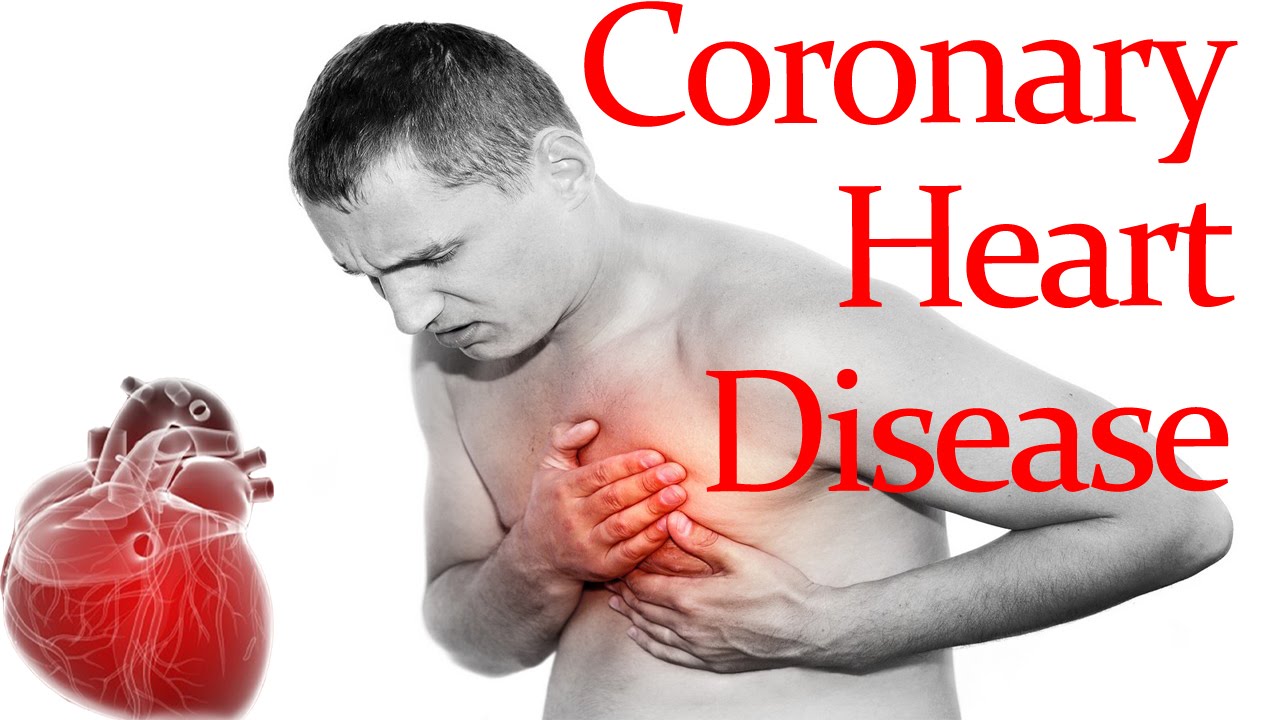
The Definition Of Coronary Heart Disease
The heart is an organ composed of muscles. Location of the heart in the chest cavity next to the front
(anterior mediastinum cavity), the left side of the bottom, located in the middle of the chest cavity above
the diaphragm and left behind his roots there between Costa V and VI (two fingers under the papilla
mammae). On this spot a palpable presence of very short pulses of the heart called ictus cordis.
The Risk Factors of Coronary Heart Disease
Risk factor of a disease are factors that are believed to increase the risk of onset of the disease is concerned.
But it is not absolute. This means that when a person has one factor alone or a combination of several
different types of risk factors, does not mean that automatically he suffered from coronary heart disease.
But it has a greater likelihood of illness than did not have risk factors. The risk factors of coronary heart
disease are :
a. Genetic
A positive family history against CHD (brother or parents who are suffering from the disease before the
age of 50 years) increases the incidence of premature atherosclerosis. The importance of genetic and
environmental influences are still unknown. However, family history can also reflect a strong environmental
component such as the lifestyle that cause stress or obesity.
b. Gender
Women more immune on coronary heart disease than men. This is because women have estrogen hormone
capable of dilating the blood vessels so that the potential narrowing occurs is smaller. But in women who
have experienced menopause, have risks as great as men
c. Cholesterol
Cholesterol is one of the word often spoken by the common people especially when it comes to health issues,
usually with negative connotations. Indeed, cholesterol is not always bad. In terms of chemistry, cholesterol
is a complex fatty compounds produced by the body. Cholesterol in the foods we eat increase cholesterol
levels in the blood. During this intake is still balanced with the needs, our bodies will remain healthy. But
most of us enter cholesterol more than what is necessary, that is by eating foods that contain fat that is rich
in cholesterol in the amount excessive. This is understandable because of the delicious dishes are generally
contain a lot of fat. Results in increased blood cholesterol levels exceed normal limits. The excess reacts with
other substances and settles in the arteries, causing narrowing and hardening of which is known as
atherosclerosis. When narrowing and hardening is fairly heavy, causing the blood supply to the heart muscle
is not enough in number, then arise in the chest pain called angina, can even lead to a heart attack.
d. Hypertension
An increase in blood pressure is a heavy burden for the heart causing hypertrophy of the left ventricle or
the left ventricle enlargement as well as high blood pressure cause trauma directly against the walls of
arteries koronaria to ease the onset of coronary atherosclerosis (coronary factor).
e. Smoking
Smoking can stimulate the process of atherosclerosis due to direct effects on arterial walls, causing carbon
monoxide hypoxia arteries, nicotine causes a mobilization of the Catecholamines cause platelet reaction,
glycoprotein tobacco can cause reactions hypersensitivity arteries.
f. Diabetes Mellitus
Diabetes causes the namely CHD risks to factor in when blood glucose levels go up especially when it takes
place in quite a long time, so the blood sugar (glucose) can become thick and this encourages the onset of
deposition of atherosclerosis in the coronary artery. Patients with diabetes tend to experience a disruption
of the heart at such a young age. Uncontrolled diabetes with high glucose levels in the blood are likely to
raise cholesterol levels.
g. Obesity
Obesity is an excess amount of body fat > 19% in male and 21% > in women. Obesity can also increase
cholesterol levels and LDL cholesterol. The risk increases when weight begins to exceed 20% of ideal body
weight. Obesity is a risk factor in the onset of encouraging others such as diabetes mellitus, hypertension
can increase the risk of the CHD. Obesity in the sense of a lack of manpower issued so that substance is
food eaten will be saved and accumulated in the body as fat.
h. Physical activity
A little physical activity can aggravate other risk factors, such as high cholesterol in blood and trigliserid,
hypertension, diabetes and obesity. It is very important for kids and adults to do physical activity as a daily
routine. One of the reasons why Americans are not active enough because they only spend time in front
of the TV and do her work in front of the computer. Some specialists recommend that children aged 2 years
and older should not spend with watching TV or wearing a computer more than two hours. Physically active
is one of the most important things to maintain heart health.
i. Stress
Stress is considered is one of the risk factors of the CHD though has yet to be measured how big the
influence of trigger onset CHD. Likewise, it is very difficult to give a definition of stress quickly. Perhaps
the closest description is a mental state that appears as anxiety, worries, abnormal preoccupation with an
impetus or because of the unpleasant environment. So a experiencing stress may complain of feeling
unwell, headache, beating (palpitations), stomach pain or insomnia, unhappy or even depression. Not all
of the symptoms are present together – the same. Stress can trigger adrenaline hormone expenditure
and Catecholamines may result in high speed the spasm of coronary artery (spam), so the blood supply to
the heart muscle is interrupted.
j. Alcohol
Alcohol can reduce the risk of CHD. However, consuming too much alcohol would be a risk. When taken in
excess, alcohol harms the heart and other organs. This can directly cause damage to heart muscle and
heart rate the heart of irreguler. Alcohol can cause obesity, high triglycerides, high blood pressure, stroke
and cancer. Alcohol will increase blood pressure. There are many reasons to keep alcohol consumption
within reasonable limits. Men are advised to drink no more than 28 units a week and women no more
than 21 units. The unit is defined as a type of alcohol (e.g. beer, wine, etc.)
How To Prevent Coronary Heart Disease
Although coronary heart disease is a disease that is deadly but preventable disease, here are some tips
on how to prevent coronary heart disease :
a. Stop smoking as early as possible
b. Exercise regularly
c. Consumption of healthy food and balanced nutrition
d. Avoid excessive stress
e. Avoid unhealthy life pattern
f. Reduce alcohol consumption
g. Maintain blood pressure
h. Control of blood sugar
i. Losing weight
How To Cope With Coronary Heart Disease
There are several ways of addressing the problem of coronary heart disease, which are :
1. Diagnostic tests
a. Electrocardiogram (ECG).
An electrocardiogram records electrical signals moving through your heart. ECG is often revealed evidence
of a heart attack before. In other cases, Holter monitoring may be recommended. With this type of ECG,
you wear a portable monitor for 24 hours while you live your normal activities. Specific abnormalities may
indicate inadequate blood flow to your heart.
b. Echocardiogram.
An Echocardiogram uses sound waves to produce images of your heart. During an Echocardiogram, a doctor
can determine whether all parts of the walls of the heart in pumping activity contribute to the heart. Weak
moving parts may have been damaged during a heart attack or receive too little oxygen. This may indicate
coronary artery disease or a variety of other conditions.
c. Cardiac Coronary.
To see the flow of blood through your heart, the doctor may inject fluids into the veins (intravenously). This
is known as an angiogram. The fluid is injected into the arteries of the heart through the pipeline is long,
thin, flexible (catheter), which skipped through an artery, usually in the legs to the arteries of the heart.
This procedure is called a cardiac catheterization. If you have a blockage that requires maintenance, the
balloon can be encouraged through the catheter and blown to increase blood flow in the heart. A pipe can
then be used to keep arteries wide open.
d. CT scan Technology.
Computerized tomography (CT), such as electron beam computerized tomography (EBCT) coronary
angiogram or CT can help physicians visualize your arteries. EBCT, also referred to as ultrafast CT scans can
detect calcium in the coronary arteries narrow fat. If a large amount of calcium is found, coronary artery
disease may occur. CT coronary angiogram, in which you receive the contrast dye is injected intravenously
in for a CT scan, can also produce images of your heart arteries.
e. Magnetic Resonance angiogram (MRA).
This procedure uses MRI technology, often combined with injecting color contrast substances, to examine
areas of narrowing or blockage-although the details may not be as clear as that provided by cardiac coronary.
2. Angioplasty and stent placement
In this procedure, the doctor inserts a long thin tube (catheter) into the narrows from your arteries. A
deflated balloon with a wire passing through a catheter into the narrows. The balloon is then inflated,
pressing the walls of your arteries. A mesh tube/stent placed in the artery to help keep the artery open.
Some stents slowly off his medication to help keep the artery open.
3. Coronary Artery Bypass Surgery
A surgeon creates a graft for coronary artery blocked do bypass use a vessel from another part of your
body. This allows blood to flow around blocked coronary arteries or narrowing. Because this requires
open-heart surgery, it's most often done for the case of multiple coronary artery narrowing.
4. Administering drugs
a. Resin
The resin of this medication works by binding bile acids in the intestine and remove it through the stool so
that the circulation of enterohepatic this drug decreases. As a result, an increase in LDL receptor function
and an increase in plasma LDL cleavage.
b. Niacin
Function lowering production of VLDL that is a precursor to LDL. With large doses of Nicotinic Acid is
indicated to improve HDL or good cholesterol in the blood to prevent heart attacks.
c. Statins
Works by inhibiting the formation of cholesterol in the liver and increased the disposal
d. Fibric Acid
The fibric acid is indicated for hyperlipoproteinemia type IIa, Iib, III, IV and v. Gemfibrozil is very effective in
lowering plasma triglyceride, so production of VLDL and apolipoprotein B decreased in the liver.
e. Ezetimibe
Ezetimibe lowers total and LDL cholesterol also increases HDL. Ezetimibe works by reducing the absorption
of cholesterol in the intestines. Ezetimibe can be used alone if no other antihyperlipidemic can be combined
with body or tolerated the Statins (an inhibitor of HMGCoa reductase) if the Statins cannot lowering the
levels of blood lipids.


Today, I’m sharing a bit of my own Afib story with you, because I want you to know I understand where you might be, right now.
BalasHapusDuring my first Afib episode, I had blood clots and a close call with a stroke. I was never stable on blood thinners. My health challenges took a huge toll on me, physically and emotionally – and on my family. For me, I felt like I was a stroke just waiting to happen.
After living this way for 22 months, during which I carried a cell phone and beta blocker everywhere I went and was always planning my travel around being near a hospital, I had a mini maze procedure, and guess what?
I've been AFIB-FREE for nearly almost a year!
Yes, Herbal Ayurvedic treatment works well and is effective, to help those living with atrial fibrillation.
www.gonatmed.com provides herbal ayurvedic Cure for Afib, Coronary Artery Disease and stroke, and even educate patients on how they can best manage it, and therefore, live their most fulfilled life.
When I was going through my Afib-related challenges, I learned everything I could about this condition.